You spend 30 minutes making the perfect Reel. You post it. It flops. Now an underperforming video sits on your profile, drags down your average engagement, and the algorithm quietly notes it failed. Every creator has lived this. In 2026, Instagram has a fix that most people are not using — Trial Reels — and it might be the single most underused growth feature on the platform.
Here is what Trial Reels are and how to use them strategically.
What Trial Reels Actually Are
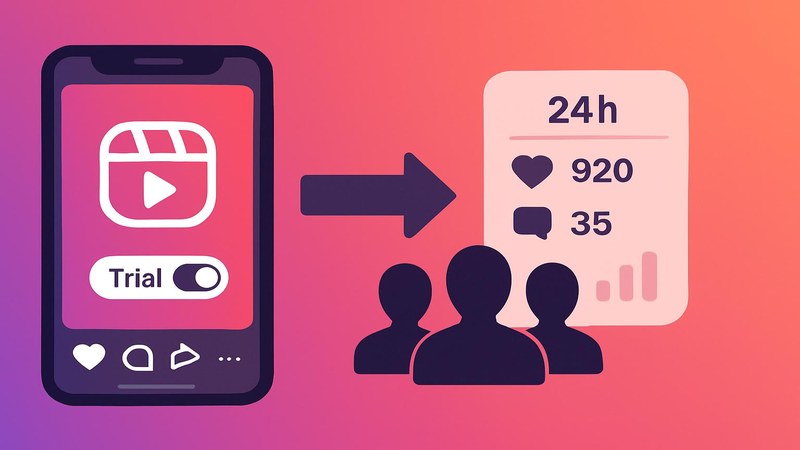
A Trial Reel is a Reel shown only to non-followers — through the same recommendation system that powers Explore and the Reels tab. It does not appear on your profile grid, in your followers’ feeds, or on your Reels tab. Your existing audience never sees it unless you decide to share it. After about 24 hours, you get performance data on how it did.
Think of it as a soft launch with a fresh audience. If it flops, nobody who matters sees the numbers. If it works, you promote it. It is the closest thing Instagram has ever built to true A/B testing for content.
Why Instagram Built This
The reason reveals something important about how Instagram works. Its own research showed creators were posting less because they feared experimenting in public — trying a new hook, format, or topic meant risking their reputation with the audience they had worked hard to build. That fear was slowing content creation across the platform.
Trial Reels remove that fear by creating a safe testing environment. And the results are real: Instagram’s own data showed Trial Reels drove an 80% increase in non-follower reach for participating creators, and 40% of users who tried the feature started posting more as a result.
Why Testing on Non-Followers Is Genius
Here is the part most creators miss. Instagram runs two separate ranking systems. For your followers, it uses the connected algorithm — their early engagement sets the ceiling for how far a normal Reel travels. For non-followers, it uses the unconnected recommendations algorithm — the same one that decides what goes viral in Explore and the Reels feed.
Trial Reels test your content directly against that second system — the one that actually drives growth. Non-followers are exactly the audience you need to reach to grow. So a Trial Reel is not just a safe test; it is a test against the precise algorithm that determines whether you break out to new people.
How to Publish One
The process is simple and available to public accounts with at least 1,000 followers. Open Instagram and tap the plus icon, then select Reel. Record or upload your vertical video as normal, and add your audio, text, and cover frame. On the share screen, before publishing, look for the “Trial” toggle or “Test” button and turn it on. Publish. The Reel now goes only to non-followers, and you can check its performance in your Reels insights after about 24 hours.
Manual vs Auto Graduation
Once your trial runs, you choose how a winner “graduates” to your followers. Manual graduation lets you review the metrics and decide whether to share it — best for controlled, deliberate testing. Auto graduation lets Instagram automatically share the Reel with your full audience if it performs well within 72 hours — best for high-volume posting. Pick manual when you want control, auto when you want speed.
Use It for Real A/B Testing
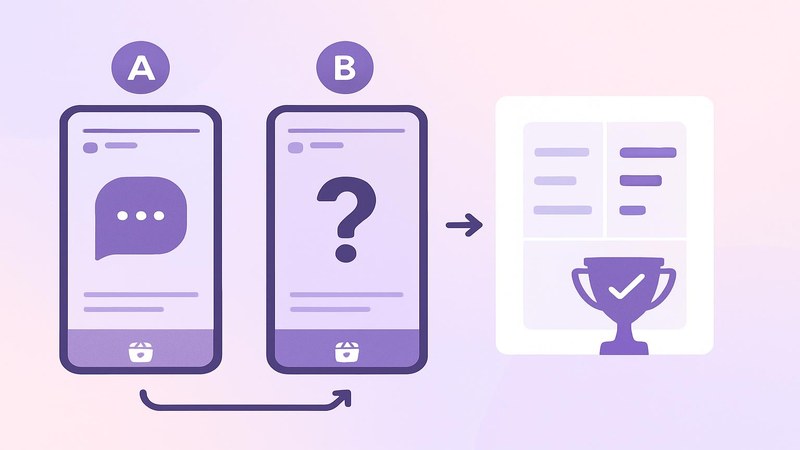
The smartest way to use Trial Reels is head-to-head testing. Post two versions of the same content with different hooks, audio, or opening formats as separate Trial Reels. Compare completion rate, likes, and shares to see which resonates, then graduate the winner to your followers. Over time, this builds a personal playbook of exactly which hooks and formats earn reach with strangers.
The key mindset: treat each Trial Reel as one data point in an experiment. One test tells you little. Ten tests tell you which hooks, topics, and formats consistently win with the cold audience you need to grow.
One Important Tip
Trial Reels work best for testing fresh hooks and new ideas — not for re-uploading old feed Reels. The whole point is discovering what works before committing. Use them to experiment boldly: new niches, risky hooks, formats outside your usual style. That freedom to experiment without consequences is exactly what makes the feature powerful.
The Bottom Line
Trial Reels let you test content with the exact audience that drives growth, with zero risk to your profile — and Instagram’s own data shows they meaningfully boost non-follower reach. Most creators do not even know they exist, which is precisely why using them is an edge. Start your first trial this week and let the data tell you what your instincts cannot.
Of course, even a winning Trial Reel needs early engagement to prove itself to that unconnected algorithm and expand — and for a growing account, generating that first momentum with a cold audience is the hardest part. When you want to give a strong Reel the early boost it needs to break through to new people, a trusted SMM service can help provide that initial push so your best tests reach their full potential.