You post a TikTok and it gets 300 views. Next day, same niche, same format, same effort — 47,000 views. What changed? For most creators, the TikTok algorithm feels random, unpredictable, and impossible to crack. It is not. It follows a clear set of signals, and once you understand them, the For You Page becomes far more predictable.
Here is how TikTok’s algorithm actually works in 2026, what changed this year, and how to structure content the system consistently rewards.
The One Thing That Makes TikTok Different
Unlike Instagram or Facebook, which were built around showing you content from people you know, TikTok pioneered a content-first model. It does not primarily show you content from accounts you follow — it shows you content it predicts you will watch. That single design choice is why a creator with zero followers can still land millions of views if the content resonates.
The practical meaning: your follower count matters far less than whether your individual video earns attention. Every upload gets a fresh shot.
The Three Signal Groups That Decide Your Reach
TikTok ranks content using three weighted categories. Understanding their relative importance tells you exactly where to focus.
Engagement signals (the heaviest weight): How people interact with your video — watch time, completion rate, replays, shares, saves, and comments. This is the most important bucket by far, and within it, watch time and completion rate are the single strongest signals.
Content signals: What your video is actually about, read through your captions, on-screen text, hashtags, and the sound you use. TikTok even uses auto-transcription now, so what you say in the video is a ranking input. Make your topic clear and easy for the system to categorise.
User signals: Watch history, device and account settings, and viewing preferences that help TikTok match your video to the right people.
What Changed in 2026
Three shifts matter most this year. First, the completion-rate bar for virality has climbed to roughly 70% — up from about 50% in 2024. Getting a wide push is harder, and it rewards tightly-edited videos with no wasted seconds.
Second, TikTok moved toward follower-first testing. Your video is now often shown to a slice of your existing followers before it reaches non-followers, so an engaged following that reliably watches your content genuinely helps your early signals.
Third, shares and saves now outweigh likes by a significant margin. A like is a reflex; a save says “I want to come back to this,” and a share says “someone else needs to see this.” Those are the actions that move you up.
How a Video Actually Travels: The 3 Phases
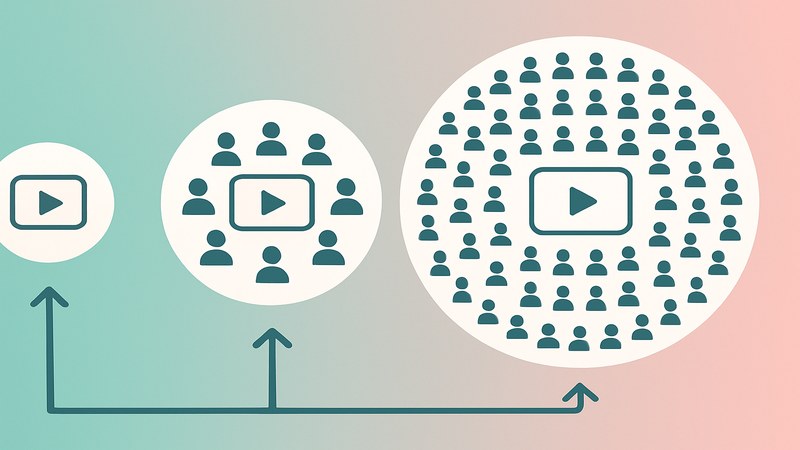
TikTok does not push content randomly — it tests, reads, and expands. Your video moves through three phases. First, an initial test pool of a few hundred viewers. If your watch time and engagement hold up there, it graduates to expanded distribution of several thousand. If the signals stay strong, it hits viral amplification and reaches hundreds of thousands or more.
This is why the opening seconds are everything. If your video flops in that first test pool, it never gets the chance to expand. Every phase is a gate, and strong retention is the key.
Niche Relevance Beats Broad Appeal
In 2026, TikTok prioritises community-aligned content over random viral hits. The algorithm wants to match your video to a specific micro-interest and the people who care about it. Content that tries to appeal to everyone appeals to no one and confuses the system about who to show it to.
Pick a clear niche and make content that resonates deeply within it. A video that 500 people in your niche love and finish is worth more than one that 5,000 random people half-watch.
Your TikTok 2026 Action Plan
Turn all of this into practice. Hook hard in the first two seconds so you clear the test pool. Edit tight to push your completion rate toward that 70% bar. Create content worth saving and sharing, not just liking. Speak your keywords clearly so the auto-transcript and content signals categorise you correctly. Post consistently — 3 to 5 times a week — so the algorithm sees an active account. And stay in your niche so the system knows exactly who to serve you to.
Understand the signals, execute against each one, and TikTok stops feeling random. It starts feeling like a system you can actually build a strategy around.
That said, even a well-optimised video needs to clear that first test pool to stand a chance — and for a newer account, getting enough early engagement to pass that initial gate is the hardest part. When you want to give a strong video the early boost it needs to prove itself to the algorithm, a trusted SMM service can help provide that first push so your best content gets its fair shot at expanding.