Most creators wake up every morning and ask the same draining question: “What should I post today?” That single habit is quietly killing their growth. It burns hours of decision fatigue before they even open the app, leads to inconsistent posting, and eventually to burnout. In 2026, the creators who win are not the ones grinding harder — they are the ones running a system.
Here is how to plan a month of content in about two hours and post consistently without losing your mind.
Why Consistency Is Worth This Much Effort
The data is staggering. An analysis of 52 million posts found that creators who post on a consistent monthly schedule see up to 450% more engagement than those posting sporadically. Consistency signals reliability to both your audience and the algorithm, which rewards active accounts with more reach — creating a compounding loop where regular posting leads to more visibility, which attracts more followers, which amplifies reach further.
The problem is that consistency through daily willpower does not last. Life gets busy, you miss a few days, and momentum collapses. A system fixes what willpower cannot.
The Hidden Cost of “What Do I Post Today?”
Decision fatigue is the silent killer of creator output. Research shows it takes over 23 minutes to fully refocus after switching tasks. Multiply that by 30 days of daily “what do I post” decisions and you lose roughly 11 hours a month — before writing a single caption. That is more than a full workday, wasted on indecision.
Batching eliminates this entirely. When you decide everything once, in one focused session, you free up all that mental energy for actually creating and engaging.
Step 1: Define Your Content Pillars
Pillars are non-negotiable. A 2026 content survey found creators with 3 to 5 defined pillars produced content 60% faster and reported lower burnout than those improvising daily. A pillar is simply a recurring theme or category your content falls into — for example, tips, behind-the-scenes, client results, and industry news.
Pillars remove the blank-page problem. Instead of “what should I post,” you ask “what is a good tips post this week” — a far easier question. They also keep your content balanced and your brand recognisable. Assign each pillar to certain days so your week has a predictable rhythm your audience learns to anticipate.
Step 2: Batch by Task, Not by Post
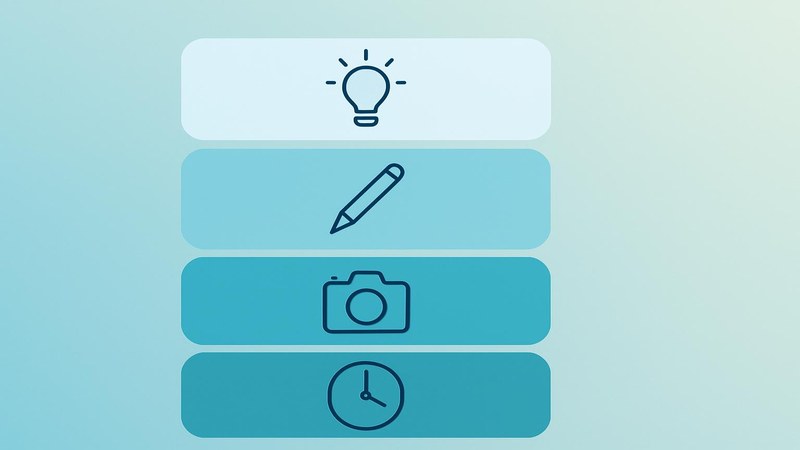
The magic of batching is doing similar tasks together instead of making one full post start to finish, then starting over. Context-switching drains your focus; batching protects it. Break your monthly session into task blocks: brainstorm all your ideas at once, then write all your captions, then create or shoot all your visuals, then schedule everything.
Working in focused blocks like this produces higher-quality output and is dramatically faster than making posts one at a time. You get into a flow for each type of work rather than constantly resetting your brain.
Step 3: Load It Into a Calendar and Schedule
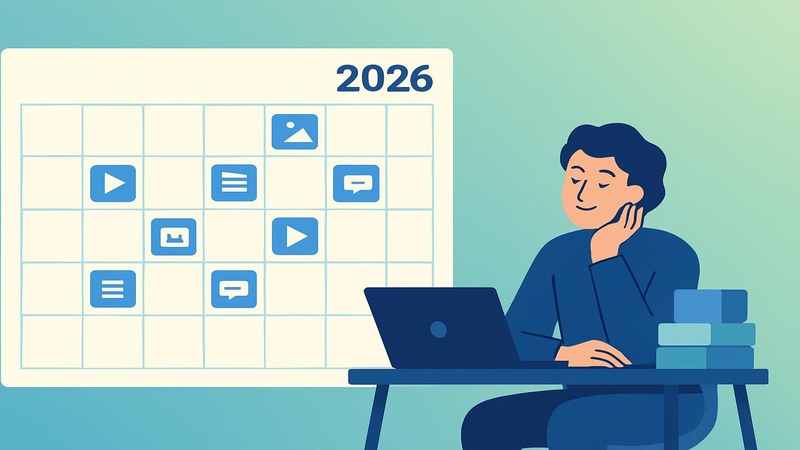
Once your content is made, drop it all into a content calendar mapped to the dates and times you want posts to go live. Assign each post to its peak window for your audience. Then schedule it. With this done, your posting runs on autopilot for weeks while you focus on creating and engaging — not scrambling.
Weekly batching works best for most creators because it keeps content current to news cycles and trends. Monthly batching is ideal only if your content is fully evergreen. For a mix, weekly is the practical default — you get the efficiency of batching without going stale.
Right-Size Your Plan So You Actually Stick to It
Here is the mistake that undoes everything: building an ambitious calendar your real capacity cannot support. It leads straight to burnout, quality drops, or empty slots. Be honest about your resources. It is far better to post 3 times a week consistently for months than 7 times a week for two weeks before you crash.
Start conservatively. A sustainable schedule you can maintain for a year beats an aggressive one that collapses in a fortnight. Consistent quality always beats sporadic overproduction.
Focus Beats Spreading Thin
One more principle: do not try to dominate every platform at once. Managing five platforms manually is a fast track to burnout. Focus on the one or two where your audience actually spends time, and do those well. Doing fewer things better produces stronger results than doing everything badly.
Your Batching Playbook
Put it together: define 3 to 5 content pillars, set aside one focused session, batch your work by task (ideas, then captions, then visuals, then scheduling), load everything into a calendar at peak times, and right-size the whole plan to what you can realistically sustain. Do this and you turn consistency from a daily battle into a system that runs itself — while your engagement compounds.
A consistent system gets your content out reliably, but each post still needs early engagement to tell the algorithm it is worth amplifying — and building that momentum is the hardest part for a growing account. When you want to give your consistent output the early boost it needs to compound faster, a trusted SMM service can help provide that initial push so your system produces real growth.