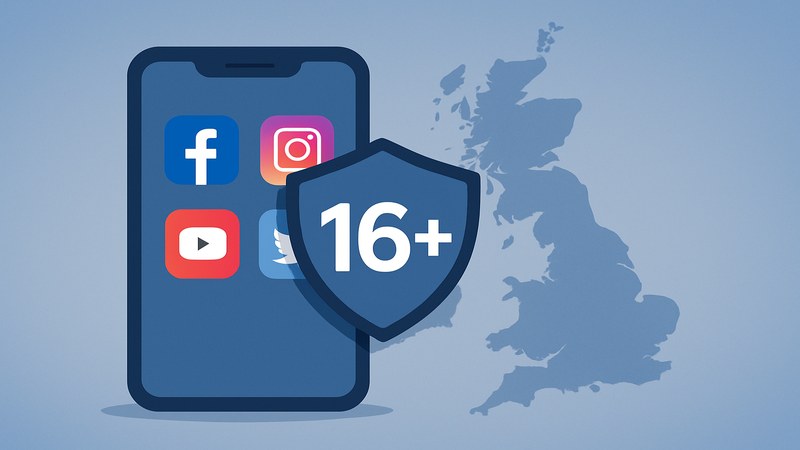
One of the biggest social media stories of 2026 is not a new feature or an algorithm tweak — it is a law. The UK government has formally announced a blanket social media ban for children under 16, and it sets a new global precedent that every creator, brand, and business should be paying attention to.
Here is what was announced, what it actually covers, and why it matters even if you are nowhere near the UK.
What Was Announced
Following a public consultation in which roughly 9 in 10 parents backed the move, the UK has committed to blocking under-16s from user-to-user platforms — including Instagram, TikTok, Snapchat, and X — by spring 2027. The policy has been dubbed an “Australia plus” model, because it follows Australia’s earlier under-16 ban but goes further in some respects.
Beyond simply blocking accounts, the UK rules reportedly introduce functionality restrictions on things like livestreaming, communication with strangers, and romantic AI chatbots. In other words, it is not just about keeping kids off the apps — it is about limiting specific higher-risk features.
Part of a Global Pattern
This is the key thing to grasp: the UK is not acting alone. Australia moved first with its own under-16 restrictions, and now the UK is following with an even broader framework. When two major Western governments move in the same direction within a short span, it usually signals the start of a wider trend rather than a one-off.
For creators and businesses, that means age verification, youth protections, and platform regulation are likely to become a bigger part of the landscape over the next few years, in more countries. It is worth watching how this develops wherever your audience lives.
What This Means for Creators
Let us be balanced here. For the vast majority of creators, the direct impact is limited — most creator audiences skew well above 16, and the change does not take effect until 2027. If your audience is adults, your day-to-day is unlikely to change much.
But there are real considerations depending on your niche. If you create content aimed at teens or younger audiences, a chunk of your potential audience in regulated countries could become unreachable on these platforms. And more broadly, expect platforms to roll out more aggressive age-verification systems, which may add friction for everyone as they get implemented.
The Bigger Lesson: Own Your Audience
If there is one strategic takeaway from regulation news like this, it is the same lesson that applies to every algorithm change and platform shift: do not build your entire business on rented land. Rules change, platforms rise and fall, and access can be restricted by forces entirely outside your control.
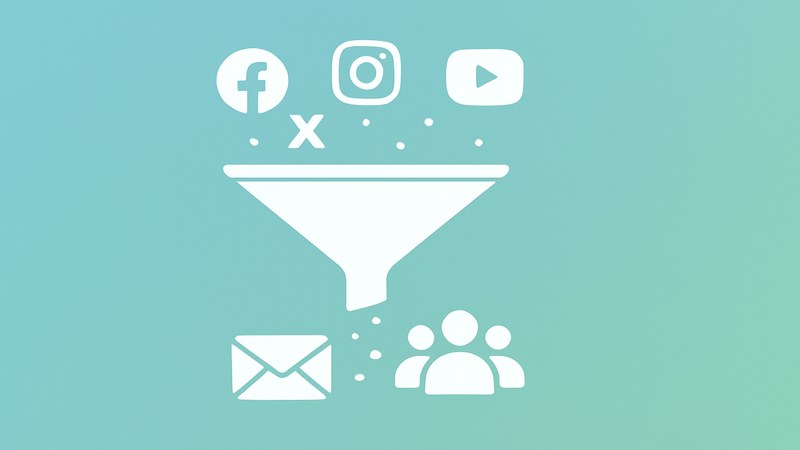
The creators and businesses who weather these shifts best are the ones who use social platforms for discovery but convert that attention into something they own — an email list, a community, a customer base, their own website or products. Social media is a fantastic top-of-funnel engine, but an audience you can reach without an algorithm’s or a regulator’s permission is what gives you real stability.
What To Do Now
There is no need to panic over a rule that lands in 2027 and mostly affects under-16s. But it is a good prompt to do a few sensible things. Know your audience’s age breakdown using your platform analytics, so you understand your real exposure. Keep an eye on age-verification rollouts on the platforms you rely on. And accelerate any plans to build owned channels — an email list or community — that are not subject to platform or regulatory gatekeeping.
The Bottom Line
The UK’s under-16 ban is a landmark moment in how governments are approaching social media, and it likely marks the beginning of a broader regulatory wave rather than the end. For most creators the immediate impact is small, but the direction of travel is clear. The smartest response is not fear — it is resilience: keep growing on social for reach, but build an audience you genuinely own so that no single rule change can ever cut you off from the people you serve.
Building that owned, engaged audience starts with growing your reach on social in the first place — and getting that early momentum is the hardest part for any growing account. When you want to give your content the initial boost it needs to reach more people and convert them into a community you own, a trusted SMM service can help provide that early push toward lasting, platform-independent growth.