Short-form video is no longer one option among many — in 2026 it is the primary way people discover creators, brands, and businesses. Reels alone now account for nearly half of all time spent on Instagram, and short-form video delivers the highest ROI of any content format. If you are not making it consistently, you are simply invisible to a growing chunk of your audience.
But posting random 30-second clips does nothing. Here is the framework that actually separates videos that travel from videos that die in the feed.
The First 3 Seconds Drive 80% of Your Results
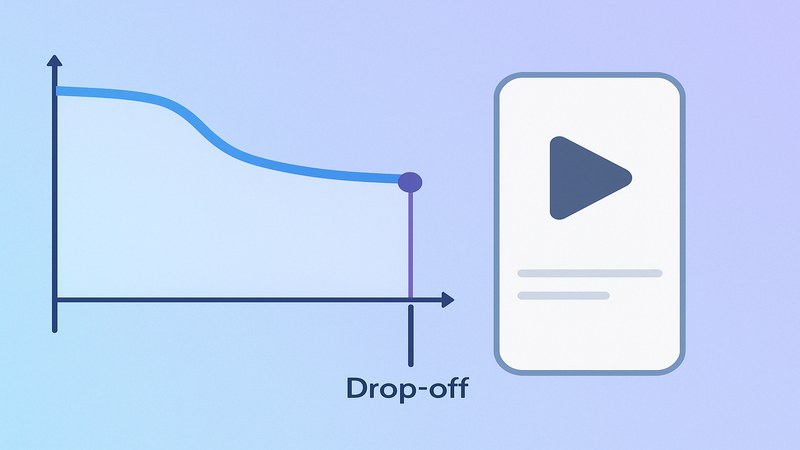
Everything starts with the hook. The data is blunt: the first three seconds drive roughly 80% of the variance in whether people finish your video. The algorithm measures “intro retention” — the percentage of viewers who make it past those opening seconds — and strong creators consistently hit 70% or higher.
To win the hook, open with one of three things: a compelling visual, a surprising statement, or immediate value. Never warm up. Never start with “Hey guys, so today I wanted to talk about…” By the time you finish that sentence, half your audience is gone. Lead with the most interesting moment and let the context catch up.
Completion Rate Beats Length — Every Time
Creators waste enormous energy debating the “perfect” video length. It is the wrong question. What the algorithm actually rewards is completion rate. A 45-second video watched fully by 70% of viewers will crush a 15-second video watched fully by only 40%.
This flips the usual advice on its head. Do not make your video short for the sake of being short — make it exactly as long as it needs to be to deliver its payoff, and no longer. If every second earns the next one, a longer video wins. The sweet spot for most short-form in 2026 sits between 30 and 60 seconds, but let the content decide, not an arbitrary rule.
Saves Are Worth 2-3x a Like
Not all engagement is equal. A like is a reflex; a save is a commitment. Saves signal to the algorithm that your content had lasting value — worth 2 to 3 times more than a like. Shares carry similar weight, because sending a video to a friend is the strongest signal of real value there is.
So build content people want to keep or send. Practical how-tos, genuinely useful lists, relatable moments worth sharing — these earn the saves and shares that move the algorithm. Before you post, ask: would someone save this to come back to, or send it to a friend? If not, sharpen the idea.
Structure Your Video Like a Story
The videos people actually remember follow a simple arc: Hook, Tension, Lesson, Payoff. Open with the hook that stops the scroll, create a little tension or curiosity that keeps them watching, deliver the lesson or value, then land the payoff that makes it feel complete.
People do not remember tips — they remember stories. Even a 40-second video benefits from this structure. It is the difference between a clip that gets watched and forgotten and one that gets saved, shared, and rewatched.
Consistency Beats Volume (Again)
The old “post 3-5 times a day” advice is dead. In 2026, 3 to 5 high-quality videos per week outperform daily low-effort posts. On TikTok and Reels, 3-5 times weekly is a strong baseline; on YouTube Shorts, 2-3 times is enough to build momentum.
The key is a cadence you can actually sustain. Algorithms reward reliability, not occasional brilliance followed by three weeks of silence. Pick a realistic rhythm and protect it. To make that volume achievable without burning out, repurpose — turn one longer piece of content into several clips rather than creating everything from scratch.
Test Your Hooks Like a Scientist
Top performers do not guess — they test. Take one core video idea and record it with 3-5 different opening hooks. Post them, then watch the retention curves to see which style your specific audience responds to. Over a few weeks, you will build a personal playbook of hook formats that reliably work for you.
Creators who test intentionally grow far faster than those who post randomly. Consistency in your testing cadence matters more than any single creative breakthrough.
Put It Into Practice
Here is your short-form checklist for 2026: nail the first three seconds, optimise for completion rather than length, create content worth saving and sharing, structure every video as a mini story, post a sustainable 3-5 times a week, and systematically test your hooks. Do those six things consistently and you are already ahead of the vast majority of creators still posting random clips and hoping.
Even a perfectly crafted video needs that first spark of engagement to signal the algorithm it is worth pushing wider — and for a newer account, getting that initial momentum is the hardest part. When you want to give a strong video the early boost it needs to break out of the cold-start phase, a trusted SMM service can help provide that first push so your best work gets the audience it deserves.